Fine Dust Capture During Food & Pharmaceutical Mixing Operations
At Controlled Air Design, we evaluate each application based on material characteristics, bulk density, dust explosibility, process conditions, and required airflow. This application-specific approach allows us to recommend appropriately designed dust collection systems for demanding food and pharmaceutical manufacturing environments.
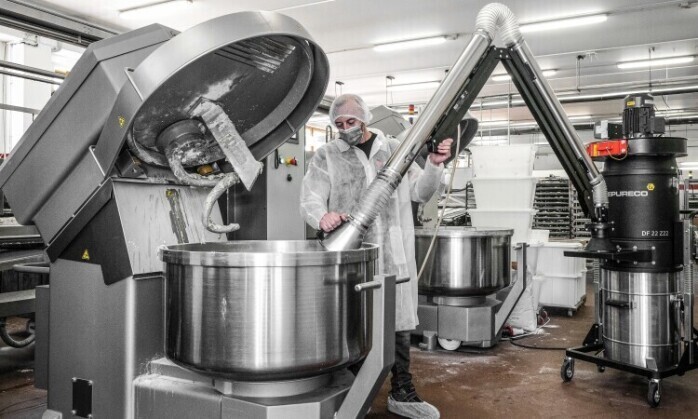
Controlling Airborne Dust During Ingredient Mixing
Vacuuming and airborne collection of organic dusts involves making sure that basic rules of grounding, bonding, filtration, and 3rd party compliance are adhered to. The solution we provide also needs to be user-friendly. Most of it is plug and play. We always keep the operator in mind when making a recommendation. We also have AUTO solutions with PLC and Auto-Cleaning.
Effective Point-of-Source Dust Control
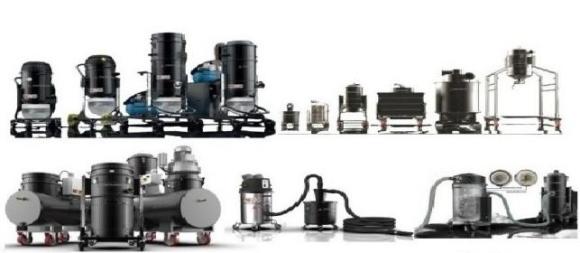
Industrial Dust Collection Using Air Changes per Hour (ACH) Within a Manufacturing Cell
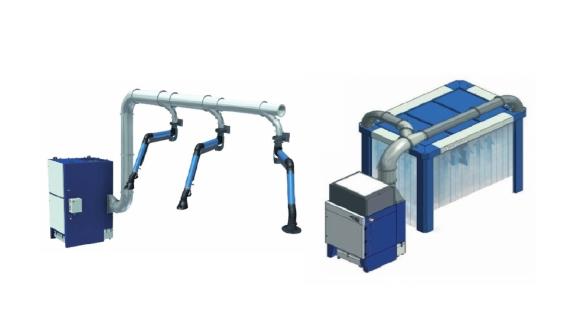
The central concept is to circulate contaminated air through a filtration system, remove suspended particulate, and return filtered air to the cell or discharge it elsewhere, depending on the system design.
The Engineering Approach: Dust Collection Using Air Changes per Hour (ACH)
Rather than relying exclusively on conventional point-of-source extraction, Controlled Air Design utilizes an alternative approach to managing airborne dust within enclosed manufacturing cells.
This method uses Air Changes per Hour (ACH) to determine the required dust collection capacity based on the enclosure's total volume and the desired air exchange rate. Contaminated air is continuously extracted, filtered, and either returned to the workspace or discharged outside the enclosure, depending on the application.
Three key design considerations are incorporated into the system:
- Air Changes per Hour (ACH): The dust collector is sized according to the enclosure's internal volume and the specified number of air changes per hour, providing a basis for continuous airborne particulate removal.
- Filtered Make-Up Air: Custom-designed louvered doors equipped with intake filters allow replacement air to enter the enclosure as contaminated air is exhausted. This helps maintain the required airflow while minimizing the introduction of contaminants from surrounding areas.
- Engineered Airflow Management: Strategic placement of filtered make-up air inlets and dust extraction points establishes a controlled airflow pattern throughout the cell, helping minimize stagnant air zones and improve overall dust removal efficiency.
By integrating these three elements, Controlled Air Design develops dust collection solutions tailored to the enclosure's dimensions, operating conditions, and particulate control requirements.