Explosion-proof vacuums are designed to prevent ignition of hazardous materials
Featuring grounded components, non-sparking materials, and, for the highest hazard levels, air-powered motors. Class I/II Div 1, NFPA 660/70, HEPA, static-dissipative, ATEX, and immersion separation.
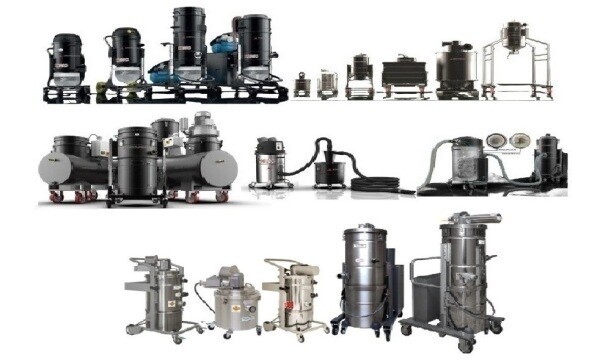
Vacuums built from non-sparking components with static-dissipative hoses and fittings, fully grounded and bonded, per NFPA 70 / NEC: National Electrical Code classifications (Class I, Div 1; Class II, Div 1).
3rd-party certified under NRTL and ATEX for hazardous locations
HEPA and ULPA filtration for wet/dry recovery of liquid and solid hazardous waste.
Conductive filters and dust-tight and liquid-tight NEMA-rated seals and gaskets. Hazardous locations, including Division 1 flammable vapors. Our air-powered vacuums are intrinsically safe and have a non-sparking design with no electrical parts.
Why Explosion-Proof Vacuums?
Organic dusts in industrial processes can create explosive conditions. Explosion-proof vacuums are designed to safely collect and contain this dust, preventing ignition and potential disasters. Explosion-proof vacuums are designed to safely collect and contain this dust, preventing ignition and potential disasters.
Key Features to Look For:
- Certification: Ensure the vacuum is certified for use in hazardous locations (e.g., Class II Division 2, Class I, II Division 1 environments).
- Safety Features: Look for features like grounding, static dissipation, and spark-free design.
- HEPA Filtration: HEPA filters can trap extremely small particles, ensuring a clean environment.
- Industrial Strength: These vacuums are designed for heavy-duty use and can handle large volumes of dust.