Some Metals are better in HAZLOC than others
Both aluminum and steel conduct electricity. “Conductive” and “sparking/non-sparking” describe two different properties.
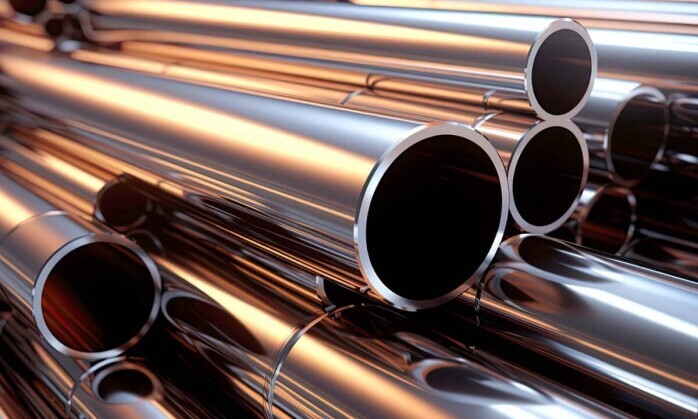
Avoiding metal to metal sparks in HAZLOC
What can I do to make my factory safer?
The highest-value improvements are:
- Identify and classify hazardous areas. Determine where combustible dust, flammable liquids/vapors, welding fumes, solvent fumes, or combustible metals such as aluminum are generated. This determines whether equipment needs a particular hazardous-location rating.
- Bond and ground conductive equipment. Metal benches, dust collectors, drums, vacuum systems, ductwork, transfer containers, and other conductive equipment should have intentional, verified bonding/grounding where static ignition is a concern. Don't assume touching the floor or another machine provides an adequate path.
- Vacuum and dust collection equipment should be clearly marked to indicate its suitability for the hazardous area and the specific materials or substances being collected.
- Our support line at (800) 635-0298 is there for when you have questions about which vacuum or dust collector is best for your application
- Control static in hoses. Ordinary plastic vacuum hoses can accumulate substantial static charge. For combustible materials, use properly designed static-dissipative/conductive hoses, fittings, pickup tools, and grounding systems appropriate to the hazard.
- Use the right industrial vacuum. A stainless or steel tank doesn't make a shop vacuum suitable for combustible dust. The entire vacuum system needs to be appropriate for the material and location—including motor, switches, filters, hoses, tools, bonding, and grounding.
- Separate incompatible dusts. This is especially important with combustible metals. Don't casually collect aluminum/magnesium dust in the same system used for ordinary steel grinding dust. Hot ferrous particles can provide an ignition source.
- Capture contaminants at the source. Downdraft benches, backdraft booths, extraction arms and properly designed dust collectors generally provide much better control than trying to clean contaminated room air afterward.
- Reduce mechanical spark sources. Look at steel casters, tools, fan components, vacuum nozzles, grinding operations and anything capable of steel-on-steel or steel-on-concrete impact in areas containing an ignitable atmosphere.
- Control housekeeping. Don't allow combustible dust to accumulate on rafters, lights, conduit, machines and other horizontal surfaces. Also avoid blowing accumulated combustible dust around with compressed air unless the procedure and conditions are specifically safe for doing so.
- Inspect electrical equipment. Extension cords, damaged receptacles, open junction boxes, motors, switches and ordinary electrical equipment can all become ignition sources. Hazardous locations may require specially rated electrical equipment.
- Inspect dust collectors themselves. Depending on the dust and installation, protection can involve explosion venting, isolation, suppression, appropriate fan construction, grounding/bonding and safe collector location. This is an area where an engineered solution is important.
- Train around the actual hazards. Employees should know why a particular vacuum, hose, grounding clamp or collection system is required. Otherwise seemingly harmless substitutions—such as replacing a conductive hose with a regular plastic one—can defeat the safety system.
Steel is conductive and can produce incendive mechanical sparks. Aluminum is also conductive and generally has a lower mechanical-sparking risk, but isn't universally non-sparking. And importantly, either metal can carry an electrical arc or static discharge. Making something from aluminum doesn't eliminate the need for bonding, grounding, and appropriately rated electrical equipment.
Static hoses can be a good alternative to pipe
Food Grade Hoses - Static Dissipative -
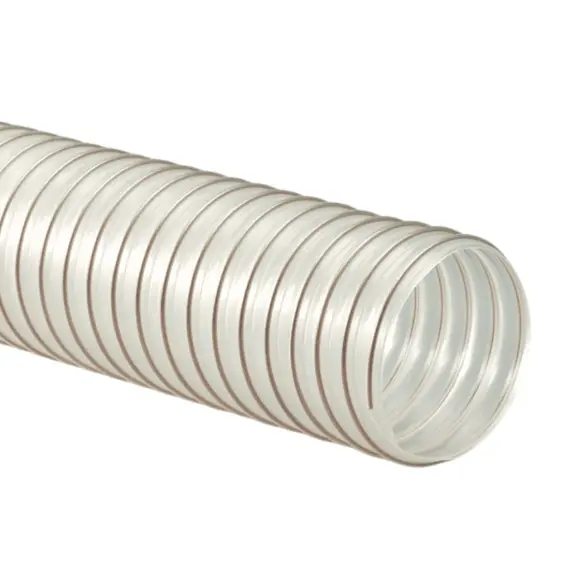
Our wide range of vacuum hoses for industrial applications goes from 1.25" up to 22" ID. Some of these specially produced to dissipate static electricity.
This can be a good way for avoiding metal piping entirely. PVC piping looks like a good solution, but it builds up a lot of static. Using something that is designed from the ground up to solve static issues can be a game-changer.
Food Grade Hoses - Ground Wire
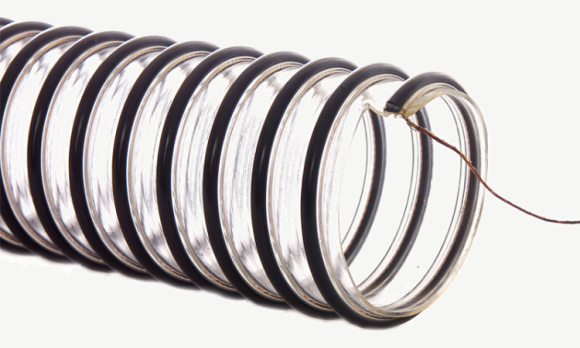
Construction: Specially formulated static-dissipative thermoplastic polyurethane hose
reinforced with a rigid external ABS helix & an embedded copper grounding wire
Temperature Range: -40°F to 200°F
Standard Color: Clear Wall with Black Helix
Standard Lengths: 25 & 50 Feet
Steel can produce hot mechanical sparks when struck, scraped, or ground against another hard material. These sparks are tiny particles of iron or steel heated to very high temperatures, which can ignite a flammable atmosphere.
Aluminum generally doesn't produce the same kind of hot ferrous sparks, which is one reason aluminum and certain copper alloys are used where mechanical sparking is a concern. However, aluminum should not automatically be considered completely “non-sparking.” For example, aluminum striking rusty steel can produce a potentially hazardous thermite-type reaction.
Related Products
- Class II Div. II Industrial Vacuums 3rd Party Certified
- Explosion-Proof Vacuums | 3rd Party Certified
- Gun Range Vacuums
- Industrial Vacuums for Additive Manufacturing
- Intrinsically safe air-powered vacuums.
- NFPA 660 Vacuums | 3rd Party Certified
- Overhead Vacuuming Tools - Non-Sparking
- Static Conductive Urethane Hose
- StatMax Conductive Hose
- Vacuum Hose with Internal Ground Wire