Why Metal Dust Requires Special Consideration
Collection Solutions for aluminum, magnesium, titanium, and other combustible metal dusts.
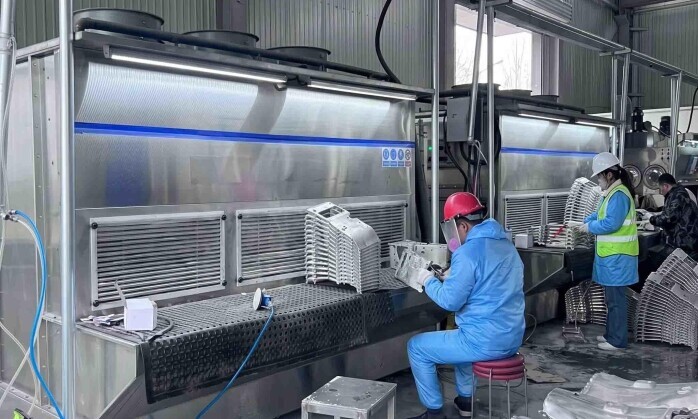
Why Metal Dust Requires Special Consideration
Combustible metal dusts, including aluminum, magnesium, and titanium, present unique fire and explosion hazards that require careful consideration when selecting dust collection equipment. Fine metal particles can ignite readily when dispersed in air, while certain metals may react with water or moisture, potentially generating flammable hydrogen gas. Factors such as particle size, dust concentration, minimum ignition energy (MIE), and explosion severity (Kst and Pmax) influence the risks associated with each application. NFPA 660 addresses these hazards and establishes requirements for the safe collection and handling of combustible metal dusts. Selecting between wet and dry collection requires a thorough understanding of the material, manufacturing process, and applicable safety requirements.
When Is Wet Dust Collection Appropriate?
Wet dust collection is often preferred for applications involving combustible metal dusts, particularly grinding, sanding, polishing, and deburring operations that generate fine particles and potential ignition sources. Wet collectors capture dust in a liquid medium, reducing airborne dust concentrations and minimizing the risk of dust cloud ignition and explosion. However, certain reactive metals, including aluminum, magnesium, and titanium, can react with water under specific conditions, potentially generating flammable hydrogen gas. Properly engineered wet collection systems must address hydrogen ventilation, sludge accumulation, material compatibility, and safe maintenance procedures. NFPA 660 provides requirements for evaluating these hazards, making the selection of a suitable wet collector dependent on the specific metal, particle characteristics, and manufacturing process.
Understanding Kst, Pmax, and Minimum Ignition Energy
Kst, Pmax, and Minimum Ignition Energy (MIE) are critical parameters used to evaluate the combustion and explosion hazards associated with combustible metal dusts. Kst measures the maximum rate of pressure rise during a dust explosion, indicating its potential severity, while Pmax represents the maximum explosion pressure that can develop in a closed test vessel. MIE identifies the minimum electrical spark energy capable of igniting a dust cloud under specified test conditions. These values help engineers assess ignition sensitivity, explosion hazards, and appropriate protection measures. However, Kst, Pmax, and MIE alone do not determine whether wet or dry dust collection is suitable. Other factors, including particle size, moisture reactivity, process conditions, and applicable NFPA 660 requirements, must also be considered when selecting a safe and effective dust collection system.
Related Products
- Pneumatic Vacuums | XP | Intrinsically Safe
- Backdraft Collector for VOC | Explosion Proof Motor/Starter
- Class II Div. II Industrial Vacuums 3rd Party Certified
- Compact Downdraft Bench | Explosion Proof Motor/Starter
- Explosion Proof VOC Extractor with Duct Collar
- Explosion-Proof Dust Collectors
- Explosion-Proof Vacuums | 3rd Party Certified
- Grindex DF JET Self-Cleaning Extractor
- HD Portable HEPA Dust Collector | Explosion Proof
- HEC Separators | Direct Bagging
- High-Efficiency-Separators for Industrial Vacuums
- Metal Grinding Downdraft Table
- Mini Central XP Dust Collector | Indoor - Outdoor
- Vacuum Hose with Internal Ground Wire
- NFPA 660 Vacuums | 3rd Party Certified
- Industrial Vacuums for the Metal-Working Industry
- Industrial Vacuums for Additive Manufacturing
- HD High-Performance HEPA Downdraft Tables
- Ducted Wet Collectors for Explosive Metal Powders